Building a Stronger Pressure Washing Business: How Berry Little Advocates for Smarter Operations and Sustainable Growth


By PWNA January 31, 2026

In an industry often driven by equipment upgrades and short-term wins, long-term success in pressure washing comes down to something far more important: operating procedures, consistency, and smart client acquisition.


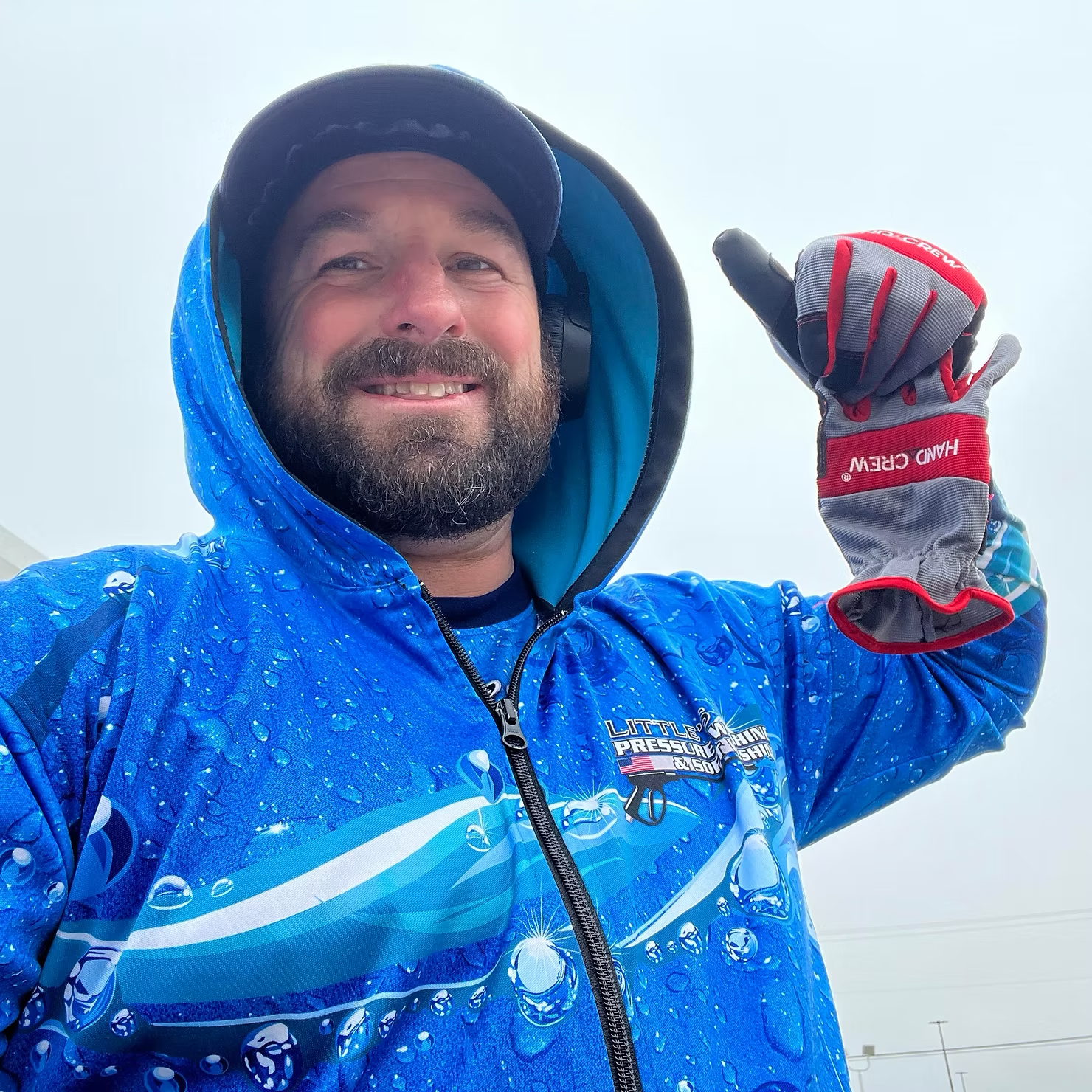
Few contractors understand this better than Berry Little, owner of Little’s Pressure Washing in Muscle Shoals, Alabama, and a PWNA Enterprise Member who has spent the last decade building, refining, and protecting a real-world service business.


Berry is widely recognized within the pressure washing community as an industry advocate— someone who believes that professionalism, structure, and education are just as critical as cleaning results. His approach reflects a growing shift in the industry: moving away from “figure it out as you go” and toward repeatable systems that protect both the contractor and the customer.


 Ten Years in the Field: Experience That Shapes Better Decisions


Berry Little’s approach to pressure washing operations is the result of long-term, hands-on experience rather than linear growth. Before starting Little’s Pressure Washing in 2015, Berry spent approximately ten years working in the industry on a part-time basis while holding other jobs. During that period, he operated a detailed shop in Tennessee and gained early exposure to service-based operations and customer expectations.


 His path into exterior cleaning began with automotive detailing, progressed into fleet washing, and ultimately evolved into residential and commercial pressure washing. After stepping away from the industry for a period, Berry returned in 2015 and launched Little’s Pressure Washing, operating under the same business name since its inception.


 Across more than a decade of combined part-time and full-time experience, Berry has encountered the full range of operational challenges common to the industry—pricing pressure, workforce development, customer expectations, equipment risk, and liability exposure. Rather than treating these challenges as isolated events, he has consistently used them to identify gaps in structure and documentation. That experience informs his emphasis on defined operating procedures, verification, and risk mitigation at every stage of service delivery.


Operating Procedures as Risk Mitigation


One of the most frequent issues Berry identifies among newer contractors is the absence of defined SOPs. Informal workflows may appear efficient in the short term, but they often lead to inconsistent results, preventable safety exposure, and customer disputes.


Documented procedures allow businesses to deliver consistent service regardless of technician, reduce callbacks, improve property protection, and support long-term operational continuity. Create a business that can grow beyond the owner


Berry’s perspective reinforces a simple truth: good systems don’t slow you down—they protect your momentum.


Client Acquisition Without Chasing Every Job


That same discipline extends to client acquisition. Rather than pursuing volume or price-driven work, Berry emphasizes qualification, expectation management, and professional communication. Clear scope definitions, documented follow-up, customer education, and the willingness to decline high-risk or misaligned jobs contribute to stronger client relationships and more defensible operations. Advocacy Through Action


 PWNA Interview: What a Decade in Business Actually Teaches You


As a PWNA Enterprise Member, Berry Little represents the type of contractor the industry needs more of: experienced, reflective, and willing to share lessons learned. His advocacy is rooted in real experience—not theory—and focuses on helping the next generation of contractors avoid common pitfalls while building businesses they can be proud of.


Berry Little’s approach is shaped by direct operational experience rather than theory. The observations he shares—about systems, risk management, and client qualification—come from years of field execution, documented outcomes, and process refinement.


 In the following interview, Berry expands on these principles by addressing real operational decisions, lessons learned over more than a decade in business, and the standards he believes contractors should prioritize to build resilient, compliant pressure washing operations.


1. Looking back over the last decade, what would you say was your biggest win as a business owner and why?


My biggest win has been learning that you don’t build something meaningful by chasing

everything. I don’t chase, I attract. You attract who you are. When you build strong systems and a healthy culture, the right people and the right clients naturally follow. The business becomes an engine that supports everyone involved, not just the owner.


2. What was one hard lesson or loss that significantly changed how you operate your business today?


I learned that speed without structure creates chaos. Early mistakes taught me that clarity,

documentation, and culture protect people and profits. Systems reduce stress, improve

consistency, and allow a business to grow without burning everyone out.


3. If you could go back to year one, what is one thing you would do differently from an operations or systems standpoint?


I would build systems and culture immediately. I would document how we operate, how we

communicate, and how we reward performance from day one. Systems create freedom, and

culture keeps people aligned.


4. What operating procedures do you believe every pressure washing business should have in place, no matter how small they are?


Clear procedures for estimating, safety, chemical handling, job execution, documentation, and

follow-up. Even a one-truck operation needs structure. Consistency builds trust, and trust builds growth.


5. What are the most common mistakes you see newer contractors making that could be avoided with better planning or education?


Chasing every job, competing on price, and ignoring culture. People want more than a job. They want to belong to something. Education and planning help owners build teams instead of just filling positions.


6. How has your approach to client acquisition evolved over the years, and what has proven to be most effective long-term?


We focus on relationships, not transactions. We treat customers like family, provide white-glove service, and over-deliver every single time. Our best marketing has always been our customers. We have built our company entirely through referrals and word of mouth. We have never run paid ads.


7. What advice would you give contractors who feel pressure to compete on price instead of value?


The race to the bottom never leads anywhere good. Value attracts better clients and better team members. When you operate with integrity, professionalism, and consistency, price becomes secondary.


8. For someone starting a pressure washing business today, what are the top things to avoid if they want to build something sustainable?

 Avoid shortcuts. Avoid neglecting systems and culture. Avoid building a business that depends entirely on you. Empower people with the right tools, create ownership through performancebased pay and bonuses, and give them something bigger to be part of. People don’t want just a job. They want purpose.


Systems Aren't Red Tape—They're Freedom

Berry Little's story isn't about shortcuts or overnight success. It's about what happens when someone stops chasing every dollar and starts building something real—something that protects clients, supports a team, and actually works when the owner isn't on every job.


After more than a decade in the field, Berry's message is simple: systems aren't red tape. They're freedom. Culture isn't a buzzword. It's what keeps good people around. And competing on value instead of price isn't just smarter—it's the only way to build something that lasts.


The pressure washing industry is changing. Contractors who document their processes, invest in their people, and lead with professionalism aren't just protecting themselves—they're raising the bar for everyone. That shift doesn't happen in isolation. It happens when experienced operators like Berry share what they've learned and newer contractors are willing to listen.


PWNA Elevate: Build Smarter. Learn From Experience.


If Berry's approach resonates with you—whether you're just starting out or trying to level up an existing operation—there's no better place to connect with contractors who think this way than the PWNA/IWCA Elevate event in Orlando, Florida.


Elevate brings together the contractors, educators, and industry advocates who are actively building better businesses. It's where real conversations happen about systems, growth, risk management, and what actually works in the field. You'll walk away with actionable strategies, proven processes, and a network of people who understand what you're up against.


Don't build this alone. The lessons Berry spent a decade learning are available to you in a few days—if you show up. Join us at Elevate in Orlando. Learn from those who've already walked the path. Build something stronger.  DoubleTree SeaWorld, Orlando, FL

February 18 - 20, 2026

https://www.pwna.org/convention


Berry Little

Little’s Pressure Washing

1900 Webster Street

Muscle Shoals Alabama

931-982-3253

Littlespressurewashingservice@gmail.com

https://www.littlespressurewashing.com

http://www.littlespressurewashstore.com


Get PWNA Updates in Your Inbox

Stay connected with industry training, safety reminders, event news, and resources for exterior cleaning professionals.

Contact Us

SHARE THIS

Latest Posts

By Apellix Power Wash Drones June 18, 2026
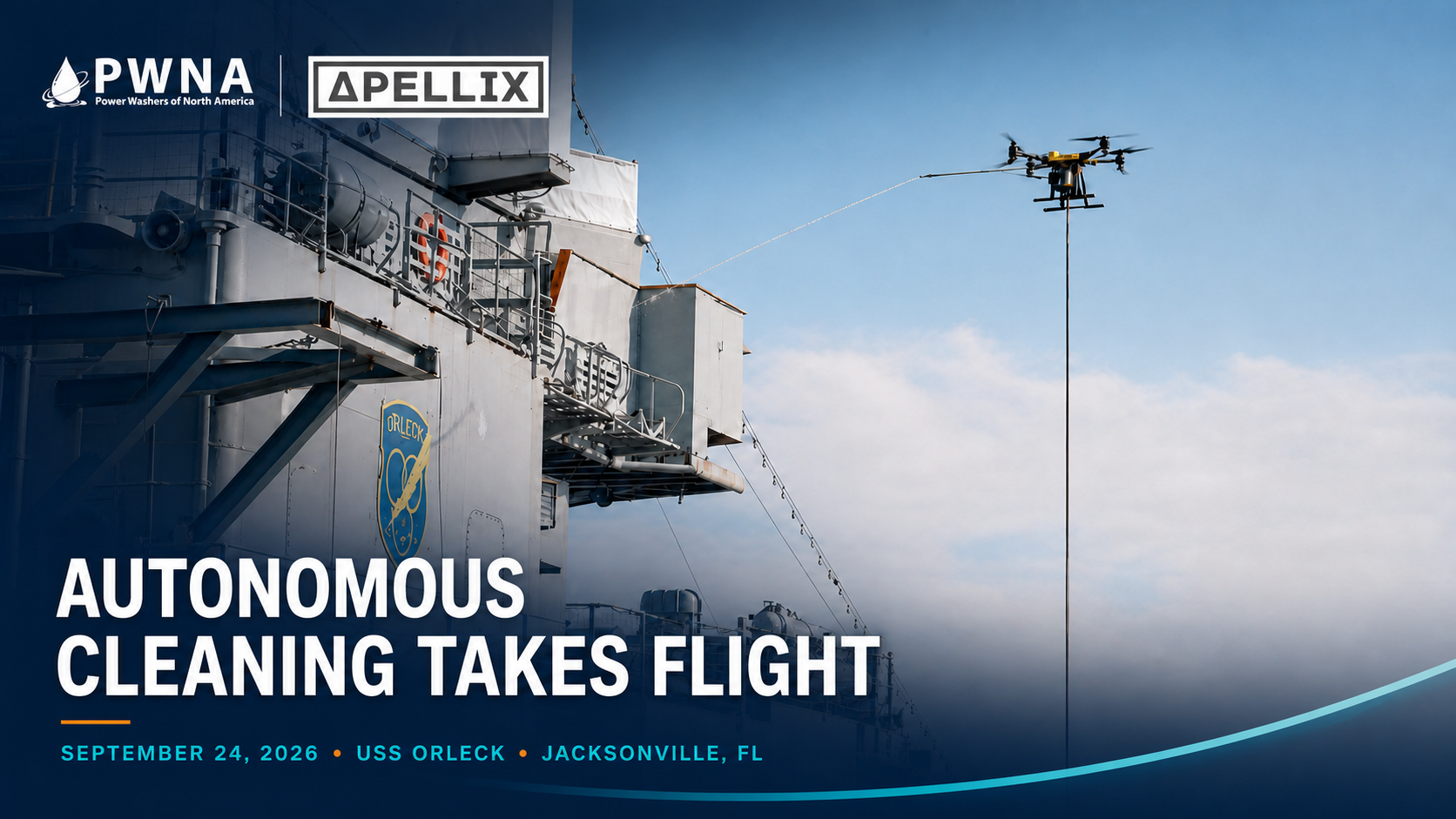
JACKSONVILLE, Fla. — June 2026 — Apellix, the Jacksonville-based manufacturer of semi-autonomous drones, will host a free, hands-on demonstration of its Power Wash Drone at Pepperdine University in Malibu, California, on Saturday, July 25, 2026. Power washing contractors, exterior cleaning operators, and facility managers are invited to watch the drone clean a section of the iconic hillside campus, and then take the controls themselves. The Apellix Power Wash Drone cleans all commercial, residential and industrial exteriors (from windows, roofs, office buildings, hospitals, universities, solar panels, stadiums, etc.) without scaffolding, lifts, or ladders — reducing the time, cost, and liability of traditional exterior cleaning methods. It is NDAA-compliant and American-made. Attendees will also see a live demonstration of Apellix Intelligence (AI), including the company's AirShift and AirTrace autonomous features, as the drone cleans a pre-programmed section of the building hands-free. "Working at height shouldn't mean putting people at height. According to OSHA, 37% of construction fatalities in 2024 were fatal falls. Apellix would like to bring that number to zero. Keep window cleaners boots on the ground and send the drone to dangerous heights instead. " said Grace Dahlstrom, Chief of Staff at Apellix. "This event is built for the contractors and operators who do this work every day. We want them to see the drone fly, fly it themselves, and walk away with the real numbers on what drone cleaning means for their labor costs, their liability, and their ability to win bigger jobs." Founder Bob Dahlstrom has spoken at length about how cleaning drones can save lives and shares a poignant story about meeting a window cleaner whose father, also a window cleaner, fell to his death. Click here for the story. Event highlights include: Live demonstration of the Apellix drone cleaning a campus building Live demonstration of Apellix Intelligence (AI) autonomous cleaning features Hands-on, guided flight time alongside the Apellix team A breakdown of the economics: labor savings, reduced downtime, lower liability, and new revenue opportunities Insights on getting started, including financing, training, and support Q&A with the Apellix team and networking with operators, facility leaders, and industry innovators Event details: What: Apellix Autonomous Cleaning Drone Demonstration in partnership with Pepperdine University When: Saturday, July 25, 2026 Where: Pepperdine University, Malibu, CA Cost: Free; space is limited 
By Apellix Power Wash Drones June 18, 2026
If you run a pressure washing or exterior cleaning company, you have probably watched the same problem play out on every mid-rise and high-rise bid: the work is up there, and getting to it is expensive, slow, and dangerous. Lifts, swing stages, rope access, and scaffolding can consume more of a job's budget than the cleaning itself, and falls from height remain one of the most persistent safety risks in our industry. OSHA sites construction related fatalities as 37% caused by fatal falls and it’s similar pressure washing at height. Drone cleaning changes that math. A spray-capable drone tethered to a ground-based pump can soft wash or pressure wash building exteriors, windows, roofs, tanks, and stadiums while every member of the crew keeps their boots on the ground. What was a niche curiosity a few years ago is now a maturing service category, and 2026 is arguably the best time yet to enter it: the technology has stabilized, training programs exist, and most regional markets still have little or no drone cleaning competition. Here is what you need to know to launch a drone cleaning business or add drone services to an existing exterior cleaning company. Why Drones, and Why Now The value proposition rests on three pillars: Safety. Crews stay on the ground instead of working at height. No swing stages, no rope access, and dramatically reduced fall exposure, which also tends to mean better insurance conversations. Speed. Jobs that took days with lifts or scaffolding can often be completed in hours. There is no equipment mobilization for aerial access, and setup time is measured in minutes. For example, CleanFlight Solutions in St. Petersburg Florida cleaned the Raymond James headquarters in 11 hours using an Apellix Power Wash Drone, when the job conventionally took 11 days. Access economics. Mid-rise buildings (roughly 3 to 15 stories) are the sweet spot, too tall for extension poles, but where traditional access costs make conventional cleaning painful. Many of these properties are simply cleaned less often than they should be because access is so expensive. That is latent demand. Tile roofs are also a sweet spot where homeowners don’t want someone accidentally stepping on, and cracking a tile. Demand-side momentum is real, too. Property managers, HOAs, municipalities, and facility managers increasingly ask for drone services by name, both for the cost savings and because it photographs and markets extremely well. The Drone Girl reported on a story where the Blue Cross Blue Shield RFP specifically requested drone cleaning. How Drone Cleaning Actually Works Purpose-built cleaning drones do not carry water onboard; water is far too heavy. There is a 55lb weight limit set by the FAA so the drone plus the water and tether must stay under 55lbs. Instead, the drone flies with a hose tether connected to a ground-based pump, drawing soft wash chemicals or pressurized water from below. The pilot (and in most setups a visual observer) operates from the ground, positioning the drone's spray nozzle against the work surface. Capabilities vary significantly by platform: working reach ranges from about 150 feet to nearly 200 feet on leading purpose-built systems, pressures run from soft wash levels up to 4,000+ PSI, and flight times per battery range from under 20 minutes to over 30. Some platforms now include autonomy features like AirTrace, which reduces pilot fatigue and improve consistency on large facades. Step 1: Get Legal — FAA Part 107 and Beyond Commercial drone operation in the U.S. requires an FAA Part 107 Remote Pilot Certificate. The good news: it is a knowledge test, not a flight test. Plan on a few weeks of study (aeronautical charts, airspace classes, weather, regulations), a roughly $175 testing fee, and you are certificated. Each pilot on your team who flies commercially needs one. Beyond Part 107, build these into your operating plan: Most cleaning drones exceed the 55-pound threshold only rarely, but verify your platform's takeoff weight with full tether and rigging. Heavier configurations can require additional FAA authorization. Airspace authorizations (LAANC) for jobs near airports, most are instant approvals through apps, but check before you quote, not after. State and local rules. Some municipalities have their own drone ordinances, and wastewater/runoff rules for cleaning chemicals apply to drone work just as they do to ground-based washing. Drone registration. Every commercial aircraft must be registered with the FAA. Step 2: Choose Your Platform This is the largest decision you will make, and the market has consolidated meaningfully. A few years ago, operators commonly modified off-the-shelf camera drones (most famously the DJI Matrice 300 RTK) with aftermarket spray kits. That path is closing: new DJI enterprise aircraft are no longer readily available for purchase in the U.S. after the FCC cracked down on foreign-made drones, and DIY conversions come with reliability, support, and liability tradeoffs that are hard to justify for a business built on uptime. In 2026, the practical choice for most new operators is between purpose-built American platforms. The comparison chart below summarizes the current landscape across the factors that matter most: price, reach, pressure, training, battery life, and NDAA compliance (which determines eligibility for government and many institutional contracts). A few buying notes beyond the spec sheet: NDAA compliance is a revenue gate. Government, military, utility, and certain facility contracts require a NDAA-compliant aircraft. If ports, highways, courthouses, universities or other government work is in your plan, this is non-negotiable. Training is part of the price. Factor in what it costs to get your second and third pilots certified on the equipment, not just the first. Reach defines your market. A drone that reaches 195 feet bids a different building than one that reaches 150 feet. Step 3: Insurance and Risk Management Standard pressure washing liability policies generally do not cover aircraft operations. You will need aviation liability coverage (commonly $1M–$5M depending on the buildings you target) plus hull coverage for the drone itself. Several insurers now specialize in commercial drone operations, and some offer on-demand per-flight coverage that works well while you ramp up. Expect commercial property managers to require certificates of insurance naming them as additional insured, same as ground work, just with the aviation layer added. Build a written operations manual: pre-flight checklists, weather minimums (wind is your main constraint, most spray work wants sustained winds under roughly 15 mph), tether management procedures, and emergency protocols. Beyond reducing risk, a documented safety program is always a good idea. Step 4: Pricing and Services Drone cleaning commands a premium over ground-based work because you are replacing far more expensive access methods. Common service lines and how operators typically price them: Building soft washing (the core service): typically priced per square foot of facade, with rates increasing for a difficult to reach area like a building next to a retention pond. Window cleaning for mid-rise commercial properties, often on recurring contracts. Roof cleaning, especially steep, fragile, or high roofs that are dangerous to walk. Specialty work: water towers, stadiums, signage, solar arrays, storage tanks, and post-construction cleanup. When quoting, anchor against the client's alternative. If a lift rental plus a three-day crew runs $15,000, a one-day drone job at $9,000 is an easy yes, and a healthy margin for you. Recurring maintenance contracts (quarterly or semi-annual washes) are where the business model really shines, because buildings that were washed every five years for cost reasons can now be maintained annually. Step 5: Marketing That Works for Drone Services Drone cleaning is the rare service that markets itself on video. Some companies like Apellix offer free, basic marketing material along with drone purchase so be sure to check you’re your drone manufacturer. Prioritize: Job-site footage. Every job is content. A 30-second clip of a drone washing a six-story facade outperforms any brochure. Direct outreach to property managers, HOA boards, and facility directors. BOMA and IFMA chapter events are good places to meet them. Your existing customer base, if you are adding drones to a pressure washing company. The buildings you already wash at ground level have upper floors nobody is cleaning. Industry credibility. PWNA membership, manufacturer certifications, and documented safety programs all close institutional deals. A Realistic Launch Timeline Study for and pass the FAA Part 107 exam; register your aircraft. Select and purchase your platform; complete manufacturer training. Secure aviation liability and hull insurance; write your operations manual. Fly practice jobs and capture video. Launch with introductory pricing for 3–5 anchor clients, then raise rates as your portfolio builds. The capital requirement is real — plan on 75,000 all-in for a purpose-built platform, training, insurance, ground rig (which is usually $25,000) and working capital. The Bottom Line Exterior cleaning is moving up the building, and drones are how it gets there safely. The regulatory path is well-marked, the equipment has matured into reliable purpose-built platforms, and demand from property managers is ahead of supply in most markets. For pressure washing professionals, drone cleaning is not a replacement for what you do. It is the same business you already know, with new technology. 2026 is the year the early movers separate from the pack. The question is whether you will be one of them. About Apellix Apellix is a Jacksonville, Florida-based aerial robotics company that designs and manufactures American-made drones for industrial cleaning, soft washing, power washing, spray painting, coating, and inspection. Their drone systems are built to help contractors work safer and more efficiently by reducing the need for ladders, lifts, scaffolding, and rope access on high-risk jobs. With technology used in commercial, industrial, and government applications, Apellix is helping advance the future of exterior cleaning through safer, smarter robotic solutions. Learn more at Apellix.com
By Shelby Bryan March 31, 2026
Running a pressure washing business means focusing on the job in front of you, not getting buried in insurance language. Still, having the right coverage plays an important role in protecting your business.
By PWNA March 16, 2026
The jobs are already out there. The only question is whether your equipment is ready to take them. Spring doesn't ease in for exterior cleaning contractors. One week you're slow, and the next your voicemail is full and your estimate calendar looks like a game of Tetris. There's no warm-up period. No dress rehearsal. The season opens hard, and whoever's standing at the plate with a working rig and stocked chemicals gets the at-bats. That's the whole game. At PWNA, we talk a lot about what it...
By PWNA March 10, 2026
As members of the Power Washers of North America (PWNA), attaining certification and training in the specialized area of pressure washing endows you with a distinct competitive edge. In today's digital age, discerning consumers extensively research via the internet and other resources to identify contractors who are not only reputable but also possess advanced training, thereby ensuring the protection of their property and the efficient use of their time. To this end, the PWNA provides a...
By PWNA March 1, 2026
A Recap of the Industry's Premier Gathering for Exterior Cleaning Professionals The exterior cleaning industry showed up — and showed out — at the 2026 ELEVATE PWNA/IWCA Convention, and the numbers say it all. With 1,039 total attendees including exhibitors and over 800 contractors walking through the doors, this year's event set a new benchmark for what the industry's premier convention can be. It was, by every measure, a record-breaking gathering and a powerful reminder of just how far this...
Show More