
Solar Cleaning Training
A solar array doesn't get locked out and tagged out — it's live the moment the sun's up. This course teaches contractors to identify hazards, work around live DC current, and run isolator poles, powered poles, brushes, and robotic systems the way a certified crew should.
Working Safely on Solar Systems That Never Power Down
Solar cleaning looks like a natural extension of pressure washing and window cleaning — until a tech remembers the array underneath their brush is carrying current the whole time they're on it. There's no breaker to flip. No lockout, no tagout. If the sun's out, the system's live, and that single fact changes everything about how the job has to be run.
PWNA Solar Cleaning Training was built around that reality, with direct input from working solar cleaning professionals and safety trainers who've seen what happens when a good tech gets comfortable around DC current, a corroded connector, or a roof they never actually inspected. Poor installs, weather damage, and even chewed wiring from wildlife can turn a routine wash into a short circuit — and water, along with the carbon fiber in most poles, conducts electricity right back to the person holding it.
This course covers hazard identification, the electrical fundamentals unique to photovoltaic systems, solar fire safety, and hands-on technique for the tools of the trade — isolator poles, powered poles, rotating brushes, and robotic cleaning platforms — so contractors can take on solar work with real judgment, not guesswork.
What This Training Builds
- DC hazard awareness — how live PV current behaves differently than the AC systems most crews are used to.
- A repeatable Job Hazard Analysis to run before boots ever hit the roof or racking.
- Solar fire safety — recognizing arcing, hot spots, and early thermal damage.
- Proper technique for isolator poles, powered poles, and rotating brush systems.
- Robotic cleaning platforms — where they fit, and when a human still needs to be on the tool.
- Pre-clean system inspection so damage gets caught before water ever touches the array.
DC Current Doesn't Care That the Sun Is Out
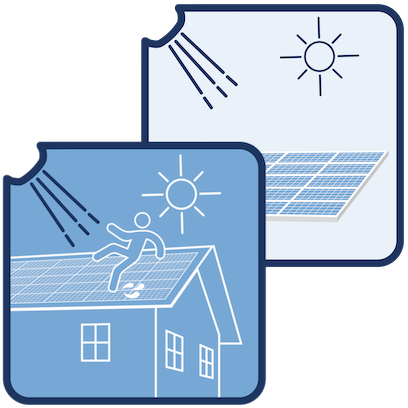
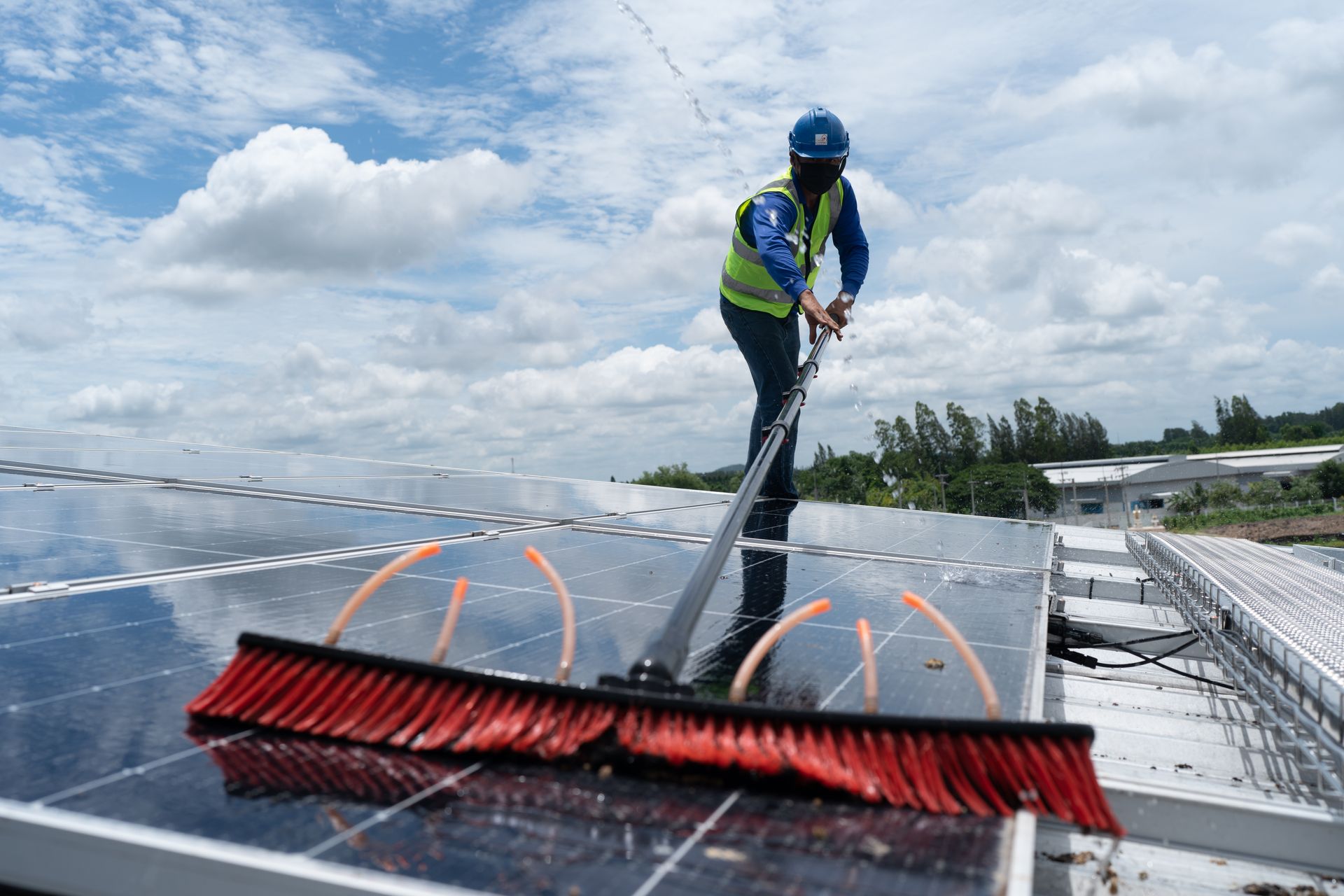
Most electrical systems can be locked out and tagged out for maintenance. A solar array can't — it's energized any time it's exposed to daylight. Water is a conductor. So is the carbon fiber used in most water fed and isolator poles. A poor install, a damaged connector, or wildlife interference can create an arc without any warning. DC current is often assumed to be the "safer" current — it isn't. Rubber gloves, an insulated pole base, and dielectric boots aren't optional gear on a solar job. They're the baseline every tech starts from.
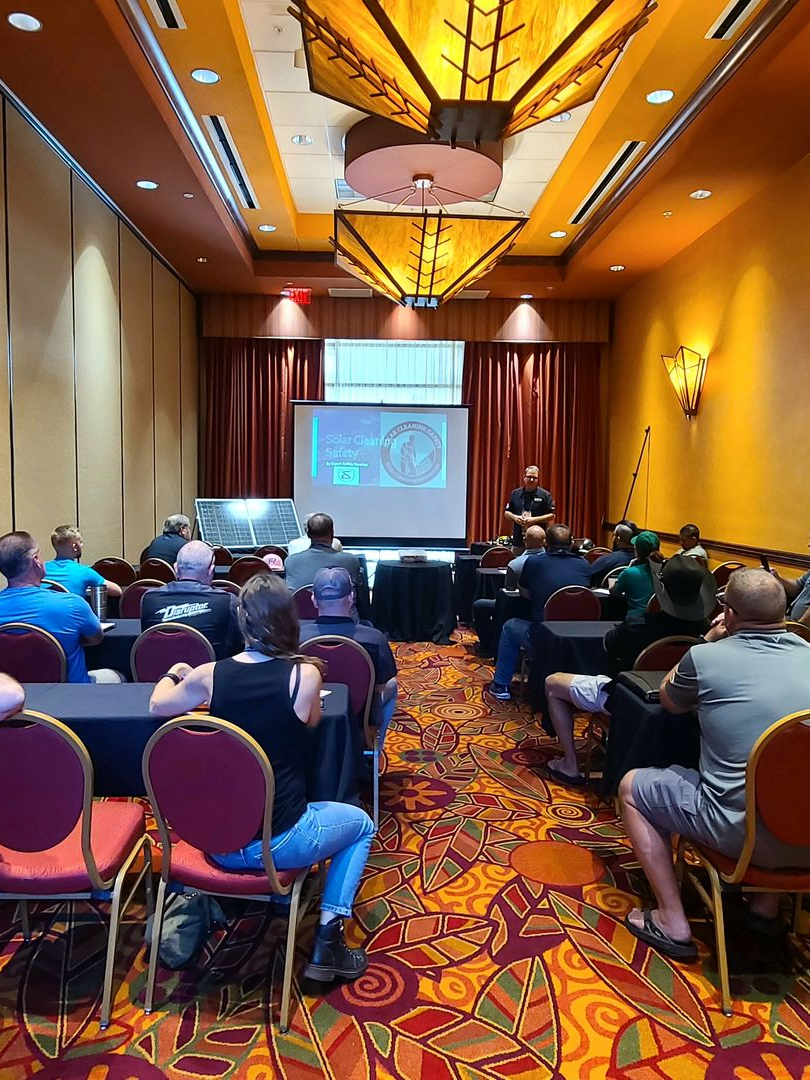
What PWNA Solar Certification Represents
What PWNA Certification Represents
PWNA Solar Cleaning Training is part of the association's ongoing commitment to professional education across the exterior cleaning trades. As solar adoption keeps expanding, more pressure washing and window cleaning contractors are being asked to add panel cleaning to their service line — often without any background in photovoltaic systems or electrical safety.
This certification closes that gap. It was shaped by a dedicated committee of solar cleaning professionals and safety trainers who bring real field experience to every module, so the training reflects what actually happens on rooftops and ground-mount arrays — not just what's written in a manual.
For PWNA members, it's a tool for onboarding new technicians, refreshing standards across an entire crew, and showing commercial and utility-scale clients that the people on their roof were trained specifically for this work.