
Window Cleaning Training
From a two-story ranch to a forty-story curtain wall, window cleaning is a height trade before it's ever a cleaning trade. This course covers OSHA-aligned fall protection, ladder and water fed pole technique, rope descent systems, and the fanning skills that separate a professional from someone with a bucket and a prayer.
Every Window Cleaning Job Starts at Height. Train Like It.
Window cleaning gets filed under "easy trade" by people who've never held a fully extended water fed pole forty feet up a building in a crosswind. The work looks simple from the sidewalk. Up close, every job starts with a decision about the ladder, the anchor point, or the rope before a single squeegee stroke happens.
PWNA Window Cleaning Training was built around that order of operations, drawing on decades of field experience from high-rise rope descent specialists and residential window cleaning professionals alike. It covers the fall protection standards that apply whether a tech is on a six-foot stepladder or hanging off a rooftop anchor, alongside the traditional fanning and water fed pole technique that separates a clean, professional finish from a streaky one.
Weather turns a routine job into a hazard fast — wind loads a pole, rain slicks a rung, and a building's own anchor points aren't always what they look like from the ground. This course trains contractors to read those conditions before they climb, not after something goes wrong.
What This Training Builds
- Fall protection fundamentals for ladder, water fed pole, and rope descent work.
- Proper harness use and anchoring, backed by an OSHA-aligned Job Hazard Analysis.
- Traditional fanning and squeegee technique for streak-free, efficient results.
- Safe water fed pole setup, including hazards near power lines and soffits.
- Weather and building assessment before a tech ever leaves the ground.
- Driver safety habits for techs who spend as much time on the road as on ladders.
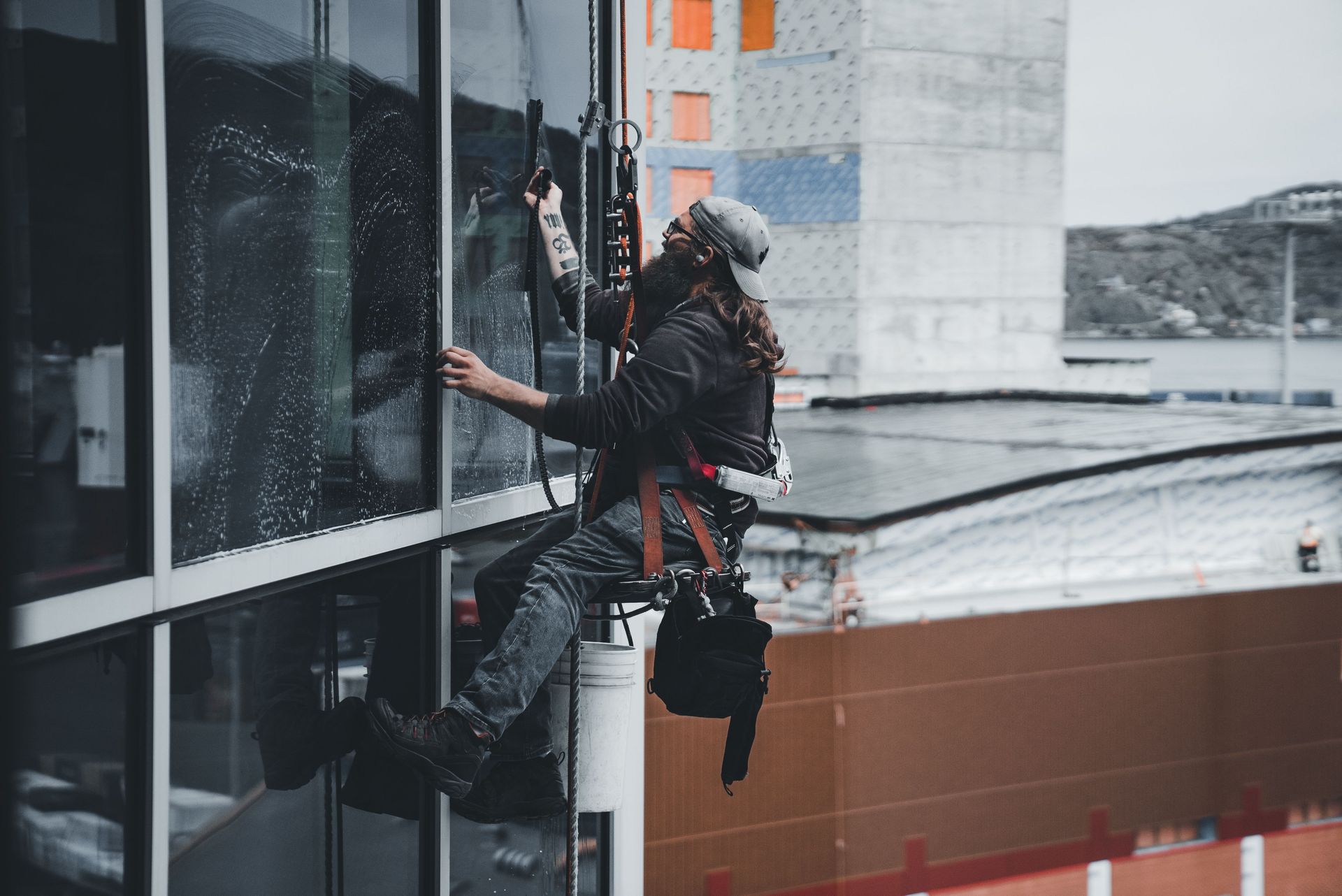
Gravity Doesn't Care How Many Times You've Made This Climb
Falls are the leading cause of injury in window cleaning, and complacency is usually the reason why. A ladder that's solid on level concrete isn't solid on a sloped driveway. A rooftop anchor point hasn't necessarily been inspected since it was installed. Wind that's calm at ground level can be a different story at forty feet. A full-body harness, an inspected anchor system, and a real Job Hazard Analysis aren't extra steps — they're the job.
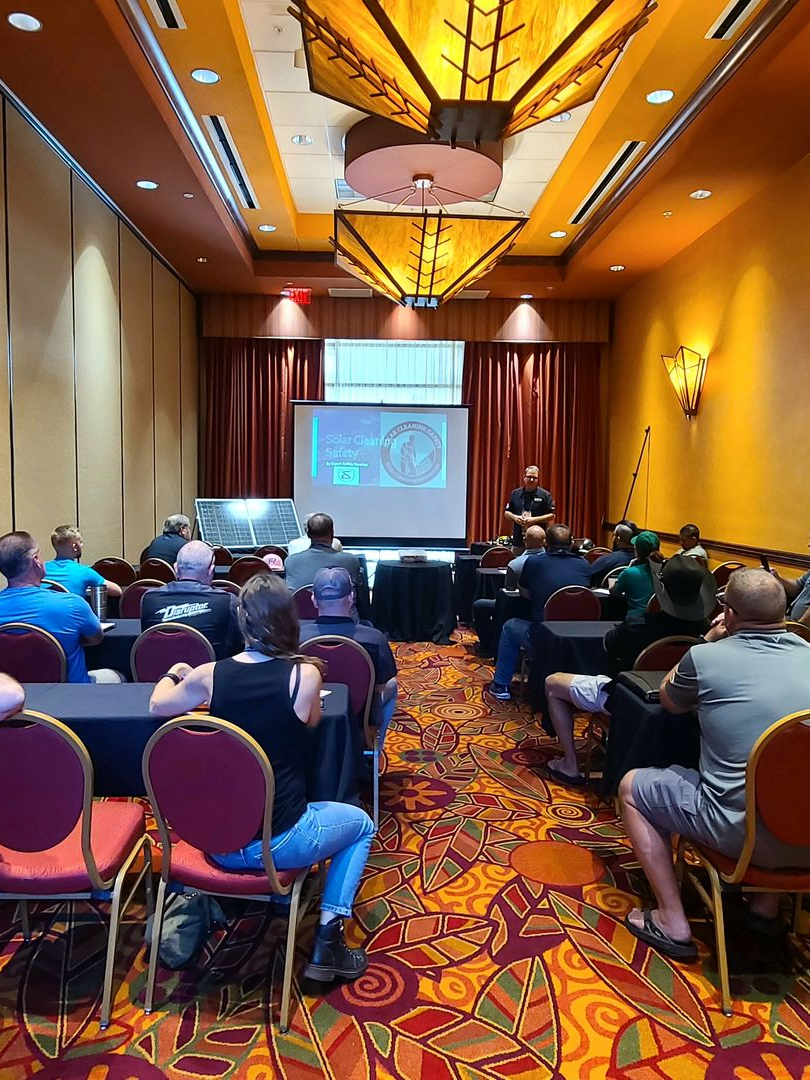
What PWNA Window Cleaning Certification Represents
What PWNA Certification Represents
PWNA Window Cleaning Training is part of the association's ongoing commitment to professional education across the exterior cleaning trades. As more contractors add window cleaning to a service line that may already include pressure washing or solar, this certification gives technicians a structured, height-safety-first foundation instead of on-the-job trial and error.
Training draws on standards used across the residential and high-rise window cleaning industry — fall protection, rope descent protocol, and hands-on fanning technique — so contractors bring a documented process back to their crews, not just a squeegee and good intentions.
For PWNA members, it's a tool for onboarding new technicians, standardizing safety across a growing crew, and showing property managers and commercial clients that the people on their building were trained specifically for height work — not just cleaning work.