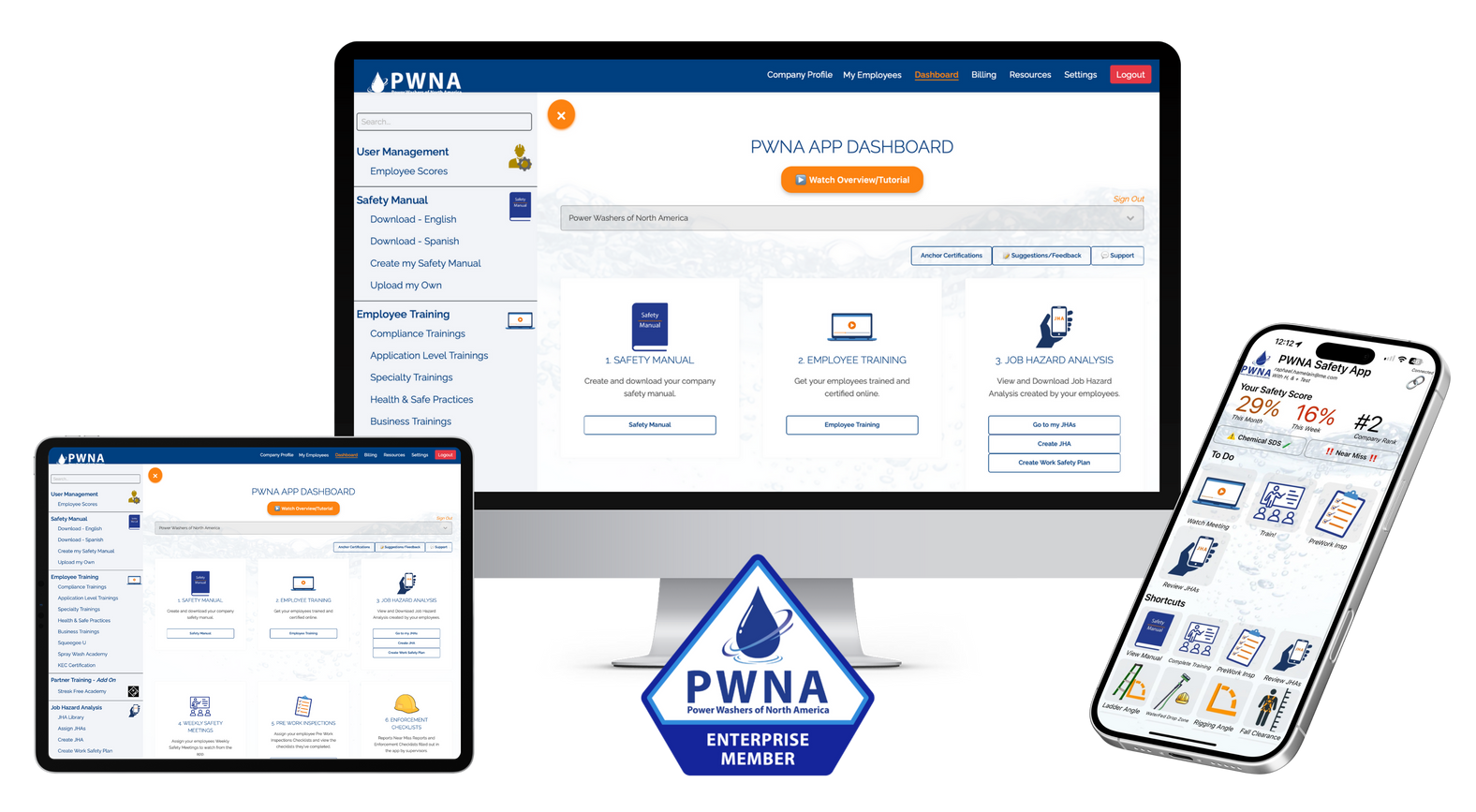

Get a first look at what's next for PWNA education, including new training and certification opportunities built to help exterior cleaning pros grow.
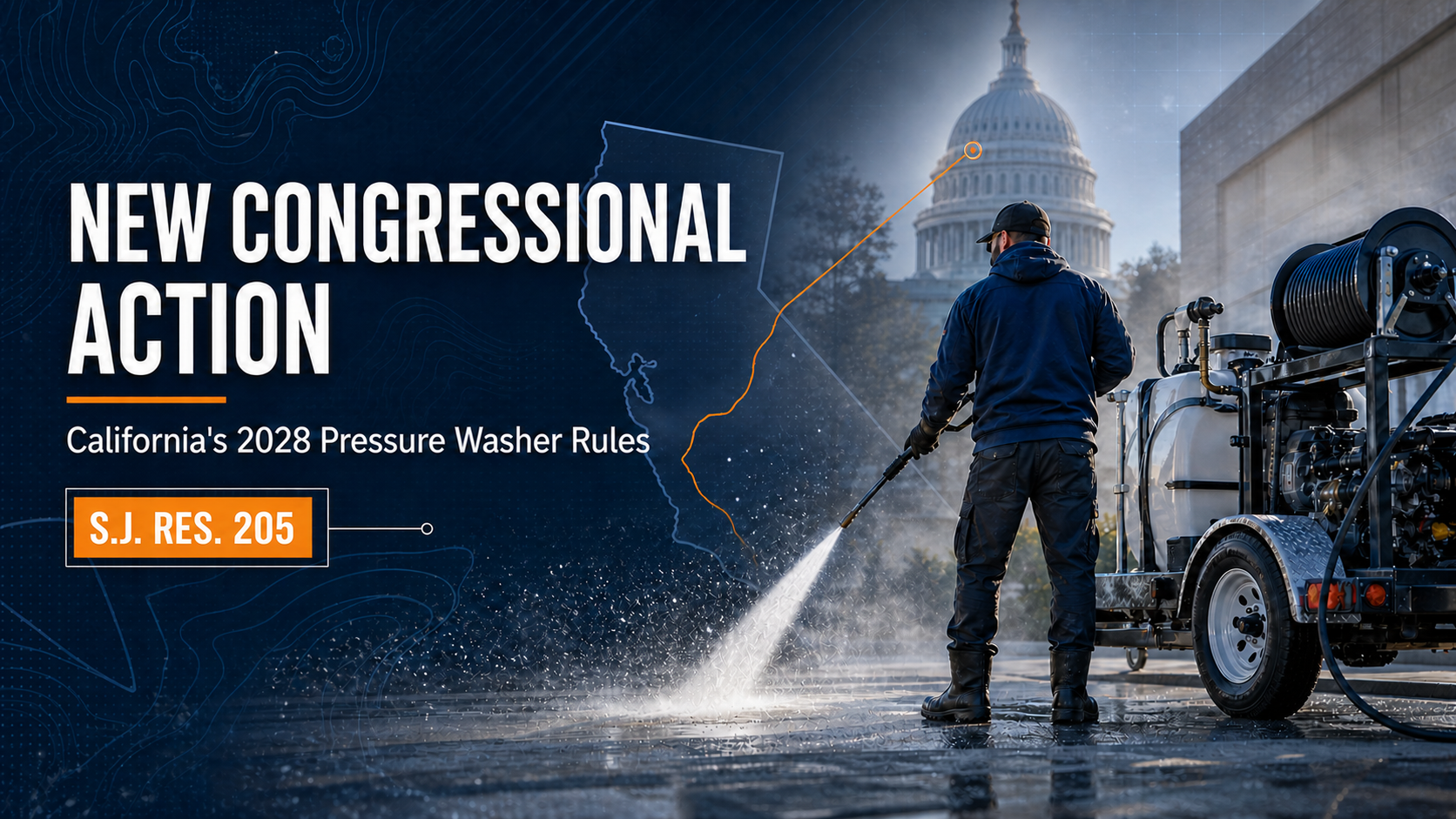
NEW CONGRESSIONAL ACTION ON CALIFORNIA'S 2028 PRESSURE WASHER RULES
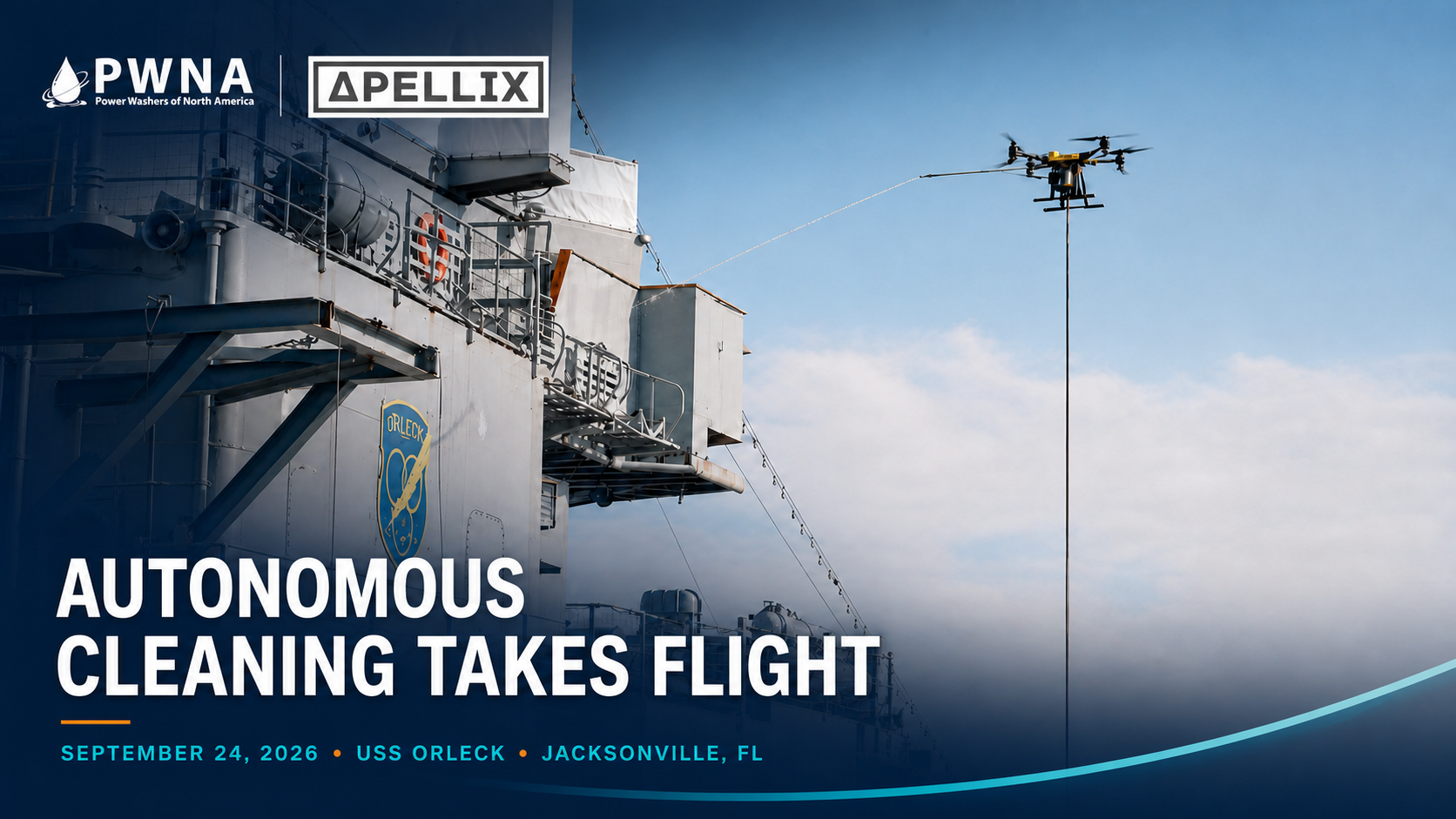
Facility managers are invited to see firsthand how the Apellix Power Wash Drone eliminates fall-risk exposure and rope-access costs on naval and government assets JACKSONVILLE, Fla. — Apellix, the Jacksonville, Florida-based manufacturer of autonomous power washing drones, will host a live demonstration for facility managers and building service teams showing how autonomous exterior cleaning removes elevated-work risk from maintenance programs. The demonstration will show the Apellix Power Wash Drone performing a live cleaning pass on the exterior of a decommissioned Navy destroyer — a surface with the kind of complex geometry, height, and access challenges when cleaning over the water that facility teams face on many commercial buildings — without a technician ever leaving the ground. Apellix will hold a live demonstration of its Power Wash Drone aboard the USS Orleck Naval Museum, 610 E Bay St, Jacksonville, Florida, on Thursday, September 24, 2026, from 12:00 PM to 2:00 PM. The USS Orleck (DD-886), a decommissioned Gearing-class Navy destroyer, offers a fitting backdrop for the demonstration: Apellix's systems are National Defense Authorization Act (NDAA)-compliant and are flown by the U.S. Army, and the event will showcase the drone's AirShift and AirTrace AI autonomy features on the exterior of a historic naval vessel. "Apellix drones are powerful tools, but the pilot remains the commander. Apellix Intelligence (AI) is a copilot for cleaning drone operations - reducing the cognitive workload of flying, helping operators stay focused on the mission, and providing the insights needed to measure and document the project's success." — Shivam Tripathy, Robotics Engineer at Apellix and technical lead in the development of Apellix Intelligence Event Details Date: Thursday, September 24, 2026 Time: 12:00 PM – 2:00 PM Location: USS Orleck Naval Museum, 610 E Bay St, Jacksonville, FL 32202 About the USS Orleck Before the USS Orleck became a floating museum in Jacksonville, parts of her radar scope were pulled out and used as props in Tom Hanks' WWII film Greyhound. The destroyer earned four battle stars in Korea, fired more than 11,000 rounds in Vietnam, and later served two decades in the Turkish Navy before returning to U.S. soil in 2000. On September 24, 2026, a very different kind of technology will fly along the USS Orleck: an autonomous drone, not enemy fire. About Apellix Apellix’ Power Wash Drone is the most widely deployed commercial cleaning drone worldwide, with active operators in 21 countries and 5 continents as of 2026. Founded in 2014, Apellix designs and manufactures autonomous drones for power washing, spray painting, inspection, and building maintenance. Apellix has National Defense Authorization Act (NDAA) compliant systems, employs disabled veterans, and is flown by the U.S. Army.

Some of the most valuable lessons in business do not happen in a classroom. They happen through honest conversations, shared experiences, and time spent with other business owners who understand the responsibilities and challenges that come with leadership. That is what makes The Summit Mastermind different. Taking place September 29–October 4, 2026, in Cabo San Lucas, The Summit brings together business owners, entrepreneurs, and industry leaders for a week focused on leadership, profitability, hiring, growth, family, and the future of business. Unlike a traditional trade show or convention, The Summit is not centered around vendor booths, product demonstrations, or technical training. Instead, it creates an environment where business owners can step away from the daily demands of running their companies and focus on the bigger picture. Attendees will have the opportunity to connect with other driven professionals, exchange ideas, learn from different perspectives, and build relationships that extend beyond the event itself. These conversations can help business owners identify new opportunities, work through common challenges, and return home with practical ideas they can apply to their companies. Running a successful exterior cleaning business requires more than technical knowledge. It also requires strong leadership, effective systems, healthy teams, sound financial decisions, and a clear vision for the future. As companies grow, business owners often face new challenges involving hiring, delegation, profitability, culture, time management, and maintaining balance between their business and personal lives. The Summit Mastermind creates space to explore those challenges alongside other leaders who understand what it takes to build and manage a successful company. It is an opportunity to slow down, think strategically, and evaluate where your business is today, where you want it to go, and what may need to change to get there. As part of PWNA’s participation in The Summit, PWNA President Clint Reynolds, owner of HydroTech Solutions, will deliver a special State of the Industry presentation exclusively for attendees. His presentation will examine the trends, challenges, and opportunities currently shaping professional exterior cleaning. It will also explore how successful contractors are adapting to a changing marketplace and what business owners should be considering as they plan for the next several years. The State of the Industry presentation is one part of a larger week designed to strengthen both businesses and the people leading them. Join PWNA and other business leaders in Cabo San Lucas for a week of stronger strategies, valuable relationships, fresh perspectives, and memorable experiences. PWNA members can save 10% on Summit Mastermind registration with code 1029PWNA through August 15. Learn more and register at www.thesummitmastermind.com/speakers .
We’re excited to announce a valuable new benefit for PWNA members—exclusive access to shipping rebates through our partnership with Estes , one of the nation’s most trusted freight shipping providers. Whether you’re launching a new service, managing bulk equipment orders, or just looking for reliable, cost-effective shipping, Estes offers precision logistics designed to support the unique needs of pressure washing and exterior cleaning professionals. Why Choose Estes? Estes specializes in product rollouts and freight solutions with an emphasis on: Single point of contact throughout your entire shipment Dedicated logistics experts who plan every detail Advanced shipment tracking for full visibility Flexible load planning to reduce handling and potential damage A nationwide terminal network and robust fleet PWNA members can now take advantage of shipping rebates and the support of a logistics team that understands time-sensitive deliveries, high-volume freight, and tight schedules. Get Started To learn more or take advantage of your member discount, contact: Contact Sundee Coin at Sundee.Coin@Estes-Express.com Ready to save on your next shipment? Estes delivers.

We are happy to announce the Sunbelt Rentals member benefit is active! Below are the details on how to participate in this benefit. PWNA Member Benefit: EQUIPMENT PRICING Sunbelt will give Independent Contractors a 7.5% discount on daily rates, a 10% discount on weekly rates, and a 15% off discount on 4-week rates for any equipment rented under this agreement. The discount would be calculated off of the current Regional or Divisional Rate for the area in which the equipment is rented. Said discount does not apply to any equipment contained in this agreement as the discount has already been applied. The rates contained herein will be good through the date stated on the rate quote but will not automatically renew even though the agreement does. The rental rates do not include any applicable taxes, freight charges, fuel charges, environmental fees, Rental Protection Plan, or any other applicable ancillary charges. Email info@pwna.org with your Sunbelt account number. Need to set up a new account, go here . Add the following to your email: Please add my company _________________ to the PWNA purchasing program with Sunbelt Rental. Include your contact information Processing takes 3-5 business days