
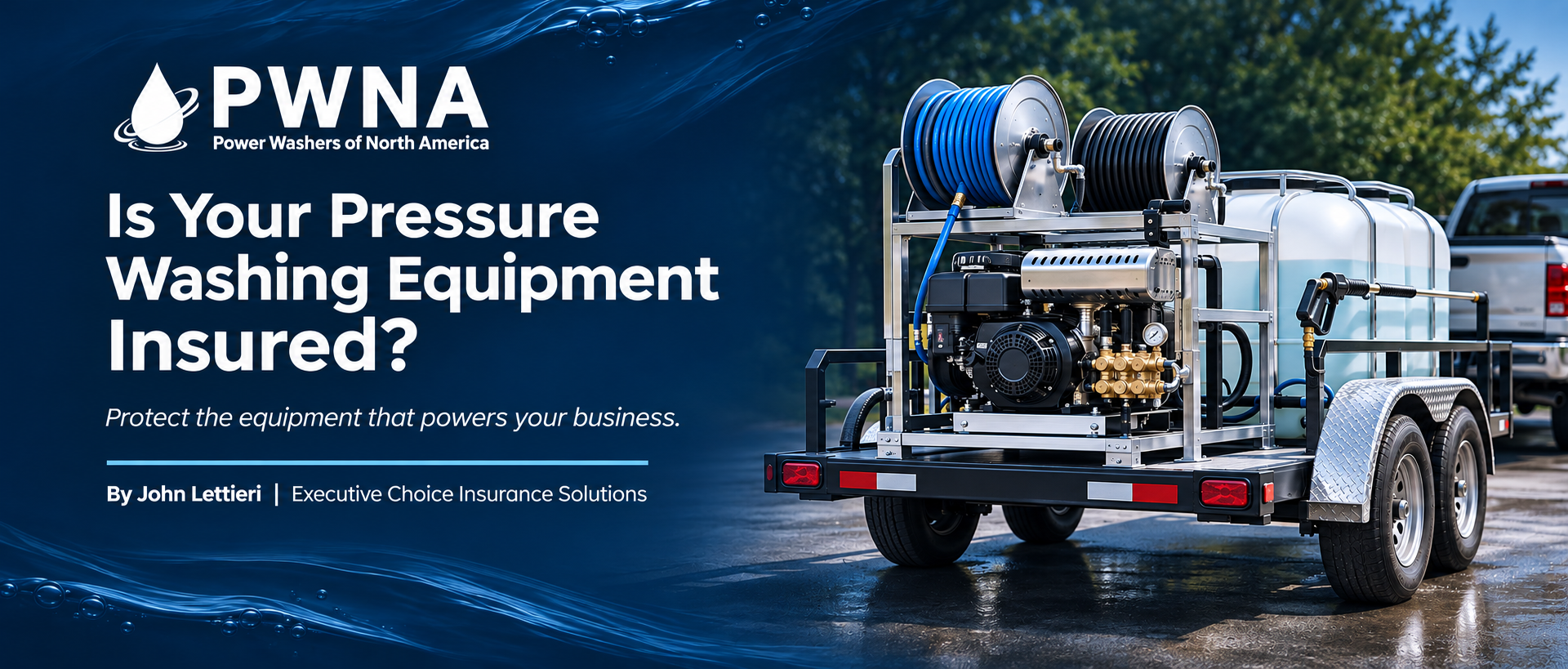
Is Your Pressure Washing Equipment Actually Insured?


By John Lettieri- Executive Choice Insurance • November 3, 2026

Your equipment is the largest investment you make when running a pressure washing business. Between custom-built skids, hoses, surface cleaners, and the vehicles that haul it all, it’s not uncommon to have tens of thousands of dollars invested in a single setup.


Yet, one of the most common misunderstandings we encounter is how to insure that equipment properly. Many contractors assume their trailer or custom skid is covered by their personal auto policy when they haul it with a personal vehicle. Unfortunately, that’s not the case.


A vehicle used for commercial purposes should be on a commercial auto policy, regardless of how your equipment is set up. How you insure the equipment itself depends on whether it’s permanently attached to a vehicle or trailer. You may need coverage through a commercial auto policy, an inland marine policy, or a combination of both.

Is your equipment covered under commercial auto insurance?

Commercial auto functions very similarly to a personal auto policy. It includes a liability limit for accidents, comp and collision coverage for physical damage to your vehicle or trailer, and options like roadside assistance, medical payments, and rental reimbursement. The meat and potatoes of the policy are the same, but it gets sticky when it comes to insuring your equipment.


For example, say you buy a pickup truck for $35,000 and install an additional $20,000 of pressure washing equipment, such as a permanently mounted pressure washer, water tanks, hose reels, and a soft wash system. If the truck is insured only for its original value without disclosing the added equipment, there could be a significant coverage gap. Unfortunately, this is a topic your local agent, or the family member who sells insurance, might not understand.


The takeaway: equipment that is permanently attached to your vehicle or trailer, including a custom-built skid, should be included in the insured value and reported to your commercial auto carrier. Ask about custom equipment coverage when you do.

Coverage for unattched equipment

If you have surface cleaners, hoses, or attachments that aren’t permanently attached to a vehicle or trailer, consider covering them with an inland marine policy. These policies cover equipment in transit and at job sites, such as loose tools.


Pricing varies, and these policies often come with large theft deductibles, such as $2,500. In our experience, most equipment claims involve theft, so an inland marine policy may not be the best fit unless you have a lot of higher-valued equipment that isn’t strapped or bolted down to your trailer or vehicle. Locking up and securing your equipment goes a long way toward preventing those claims in the first place.


Most inland marine carriers also restrict equipment that is permanently mounted to vehicles or trailers, which is why it’s important to confirm exactly how each piece of your equipment is being insured.

the biggest take-away

In short:


  • Permanently attached to a vehicle, trailer, or skid: include it in the vehicle’s value on your commercial auto policy.
  • Loose or unattached: consider an inland marine policy, and weigh the theft deductible.
  • A mix of both: confirm with your agent how each piece is covered.


Overall, it’s best to talk with a specialized agent who understands how your equipment should be covered. Be upfront and honest about how all of it is attached so your property is properly covered. After all, protecting the equipment that keeps your business running is just as important as protecting the work you perform.


About the author

John Lettieri is the CEO of Executive Choice Insurance Solutions, an independent insurance agency specializing in helping exterior cleaning companies protect their businesses. John and his team help contractors understand their coverage and find insurance tailored to their operations, including general liability, workers’ compensation, commercial auto, and equipment coverage.


Connect with John at john@executivechoiceins.com or (833) 600-5833, or visit executivechoiceins.com.


Get PWNA Updates in Your Inbox

Stay connected with industry training, safety reminders, event news, and resources for exterior cleaning professionals.

Contact Us

SHARE THIS

Latest Posts

By Steve Williams- ISCA • November 4, 2026
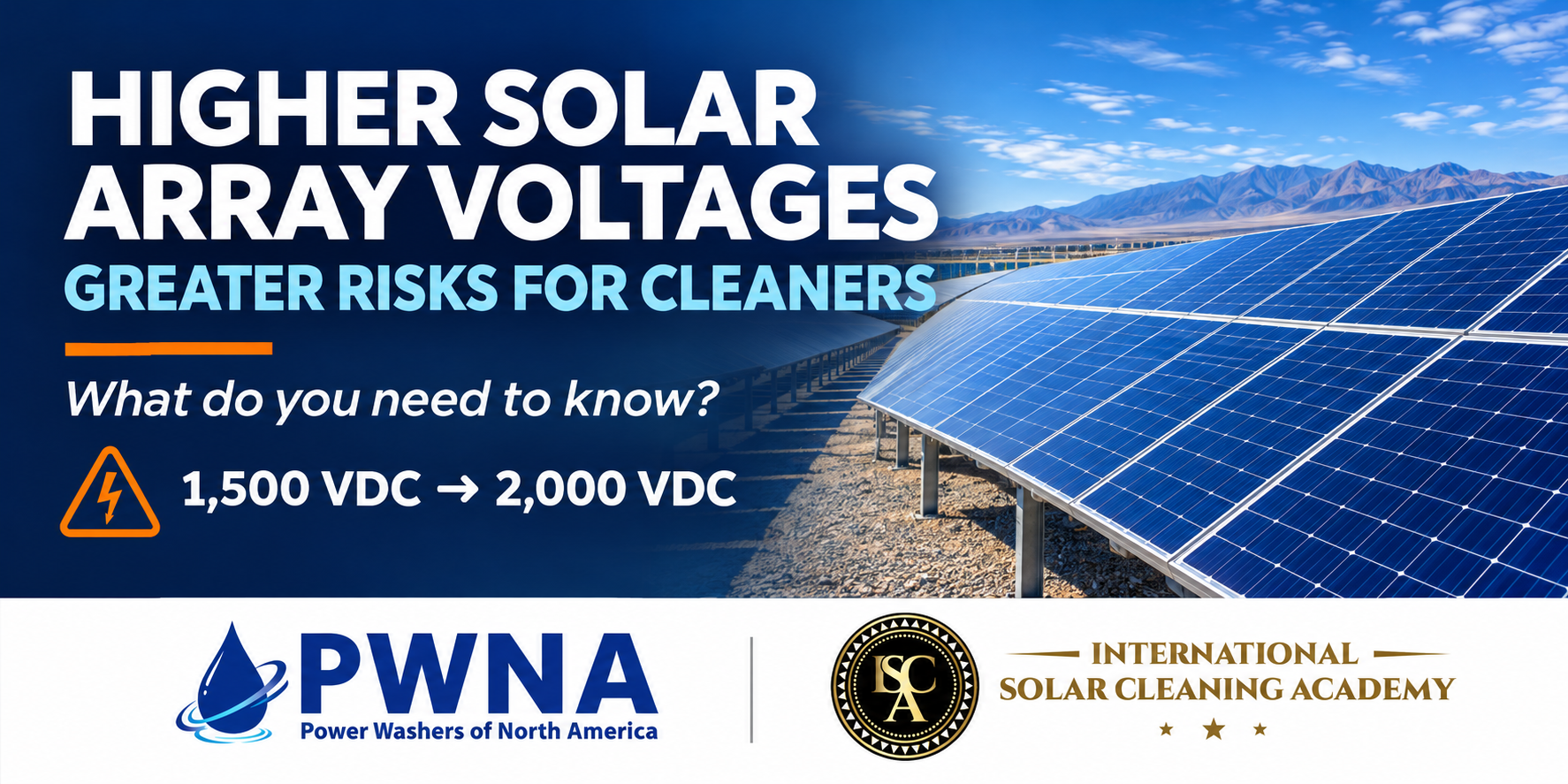
As photovoltaic technology moves from 1,500 VDC toward systems rated up to 2,000 VDC, solar cleaning businesses need to review their equipment, working methods and electrical safety training. The consequences of getting it wrong can be fatal. Solar panel cleaners can no longer assume that 1,500 volts DC represents the highest system voltage they may encounter on a utility-scale installation. In March 2025, Sungrow reported that it had deployed a 2,000 VDC photovoltaic system inShaanxi, China. Electrical connector manufacturer Stäubli also offers photovoltaic connectorsapproved for up to 2,000 VDC. Higher voltage solar technology is already a reality, rather than simply a future possibility. This does not mean that every solar farm now operates at 2,000 VDC, or that this voltage has become universally permitted across US installations. It means that cleaning contractors need to verify the electrical characteristics of each site rather than rely on previous assumptions. 
October 29, 2026
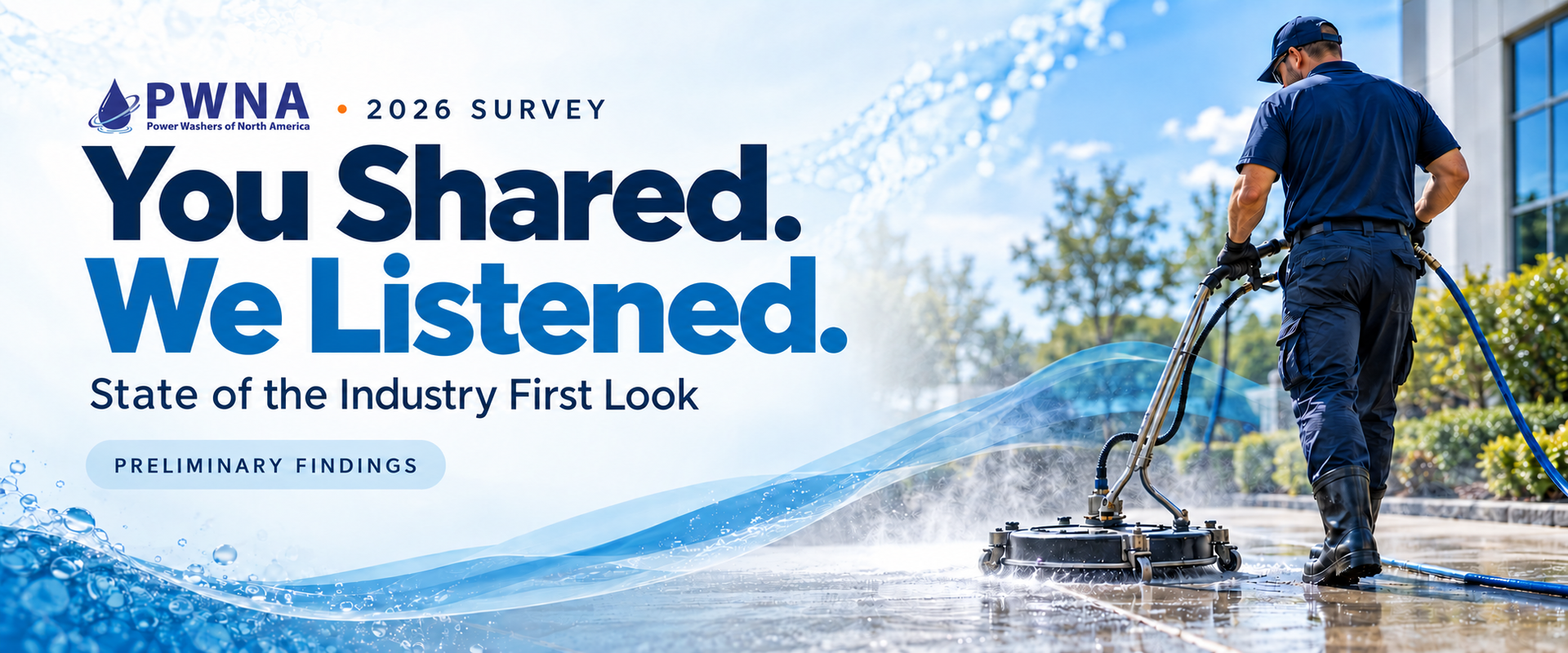
Every pressure washing business has a story. Together, those experiences can help us better understand where our industry stands and what contractors need to move forward.  PWNA’s 2026 State of the Industry Survey invited professionals to share their perspectives and experiences. Now, we’re sharing preliminary findings to give our community a first look at what we’re learning.
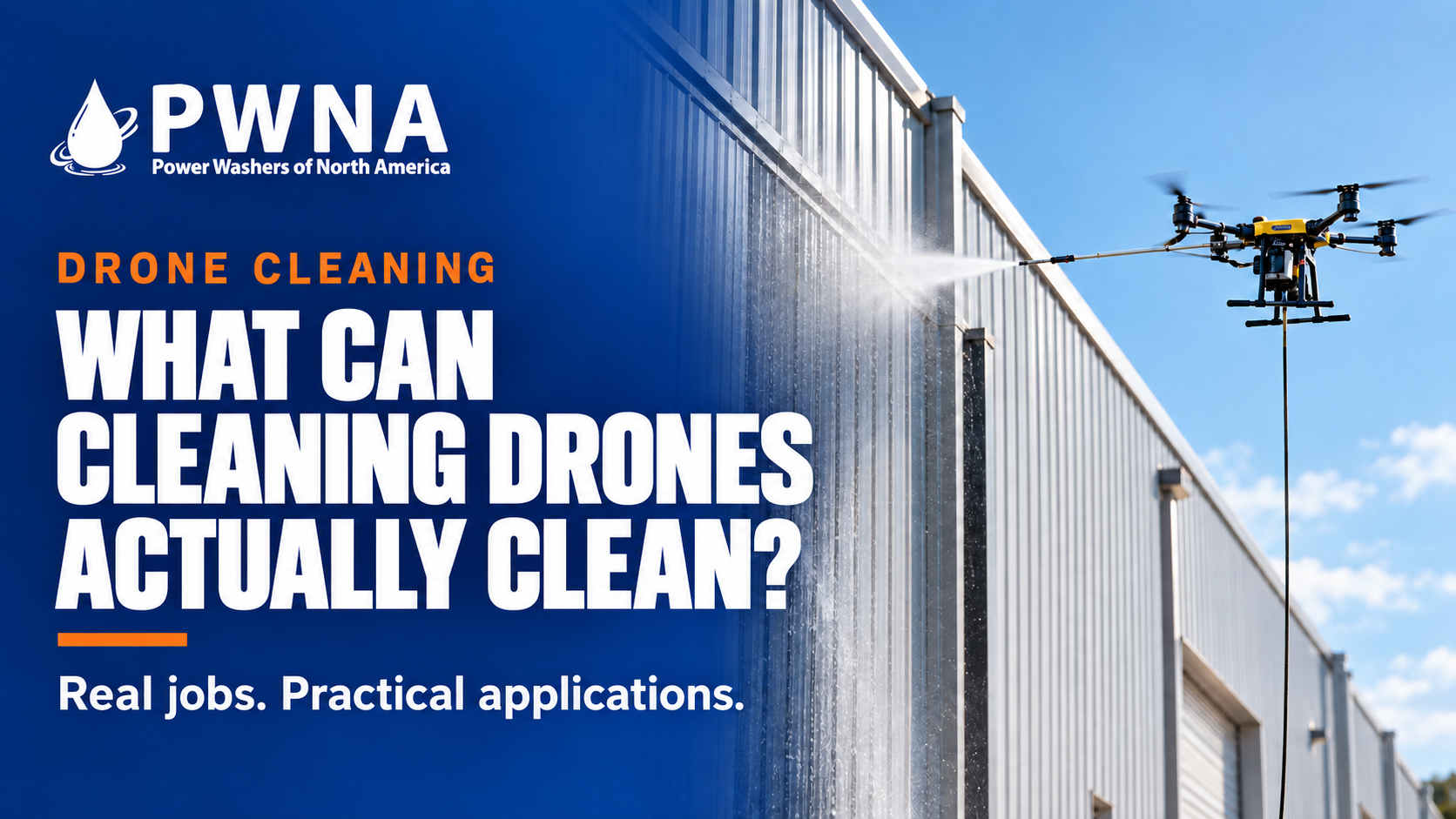
By Apellix Drones • October 26, 2026
four real-world jobs show where pressure washing and softwashng from the air can work
October 13, 2026
The end of the year can be a busy stretch for business owners. Between finishing jobs, managing expenses, and planning for next year, tax preparation can easily slide down the list. Setting aside time to review your finances now can help make filing season more manageable. For U.S. business owners, a useful starting point is straightforward: organize your records, understand where your business stands, and discuss questions with your tax professional before making major financial decisions.
PWNA promo graphic: “FIRST LOOK WHAT’S NEXT FOR PWNA EDUCATION” with workers, solar panels, and truck in rain
By Kayla Lipker • September 15, 2026
Get a first look at what's next for PWNA education, including new training and certification opportunities built to help exterior cleaning pros grow.
September 1, 2026
NEW CONGRESSIONAL ACTION ON CALIFORNIA'S 2028 PRESSURE WASHER RULES
Show More